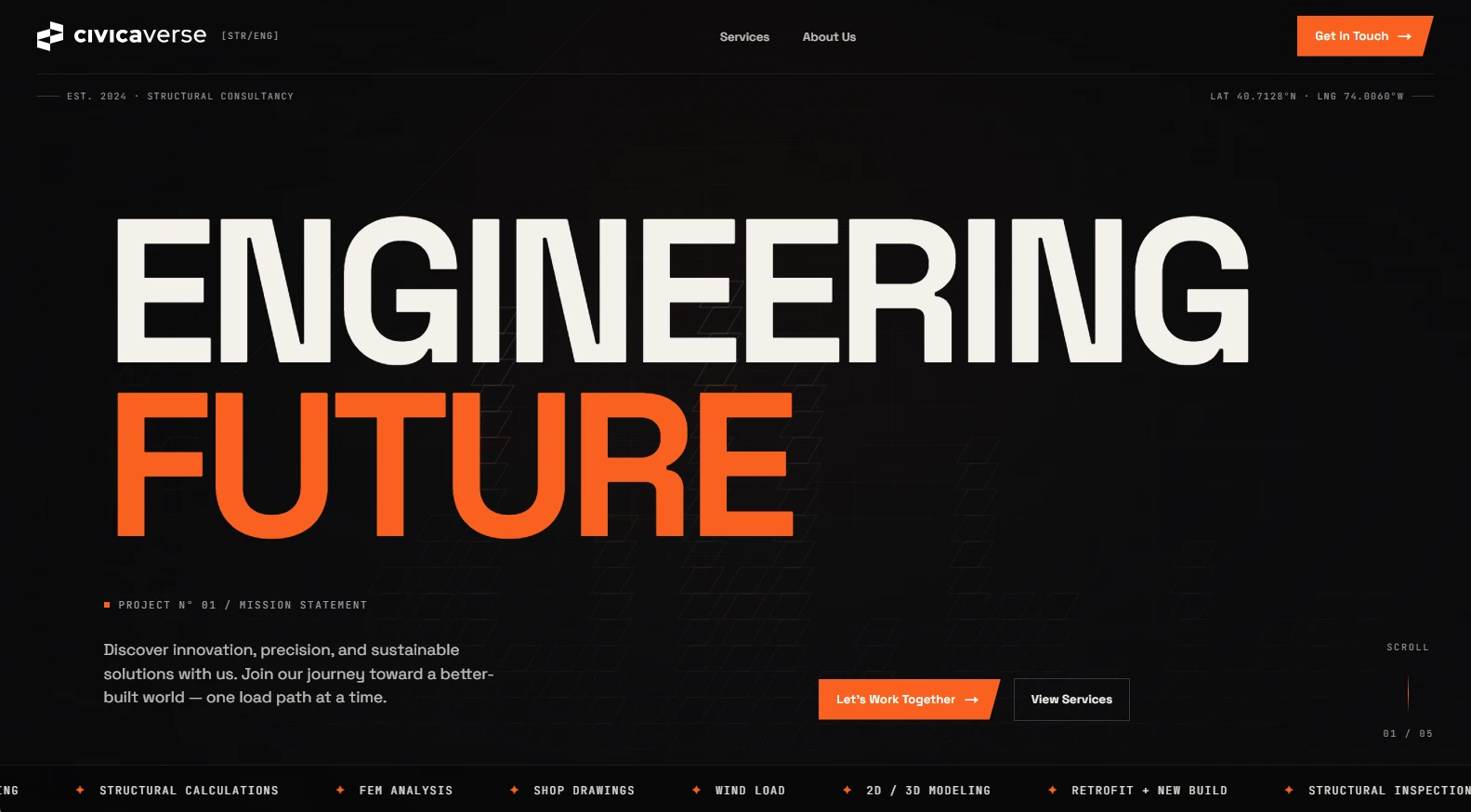
Civicaverse is a structural engineering consultancy serving architects, contractors, and owners — from single-family homes to mixed-use districts. Like many young technical firms, it operated on referrals and word-of-mouth without a digital presence that matched the rigor of the actual work.
What the firm needed wasn't a brochure. It was a working storefront — one that communicated technical depth, set expectations on scope, and surfaced the principal's craft to inbound prospects before the first email.
Two paths existed: hand off design files to a developer, or ship the site myself. I chose the second — but with a twist. Instead of writing the production code by hand, I built the site using AI development tooling. My job was to make the design intent unambiguous; the AI's job was to translate that intent into working Next.js.
The unlock turned out to be the design system. AI tools execute well when the source of truth is well-structured — tokens, components, naming conventions, file architecture. Sloppy specs produce sloppy implementations. Civicaverse v2 was an experiment in pushing that further: how cleanly can a designer direct an AI build if the design system specification is rigorous, and how much hand-coding actually remains?
Four phases. The first three are mine. The fourth is a partnership.
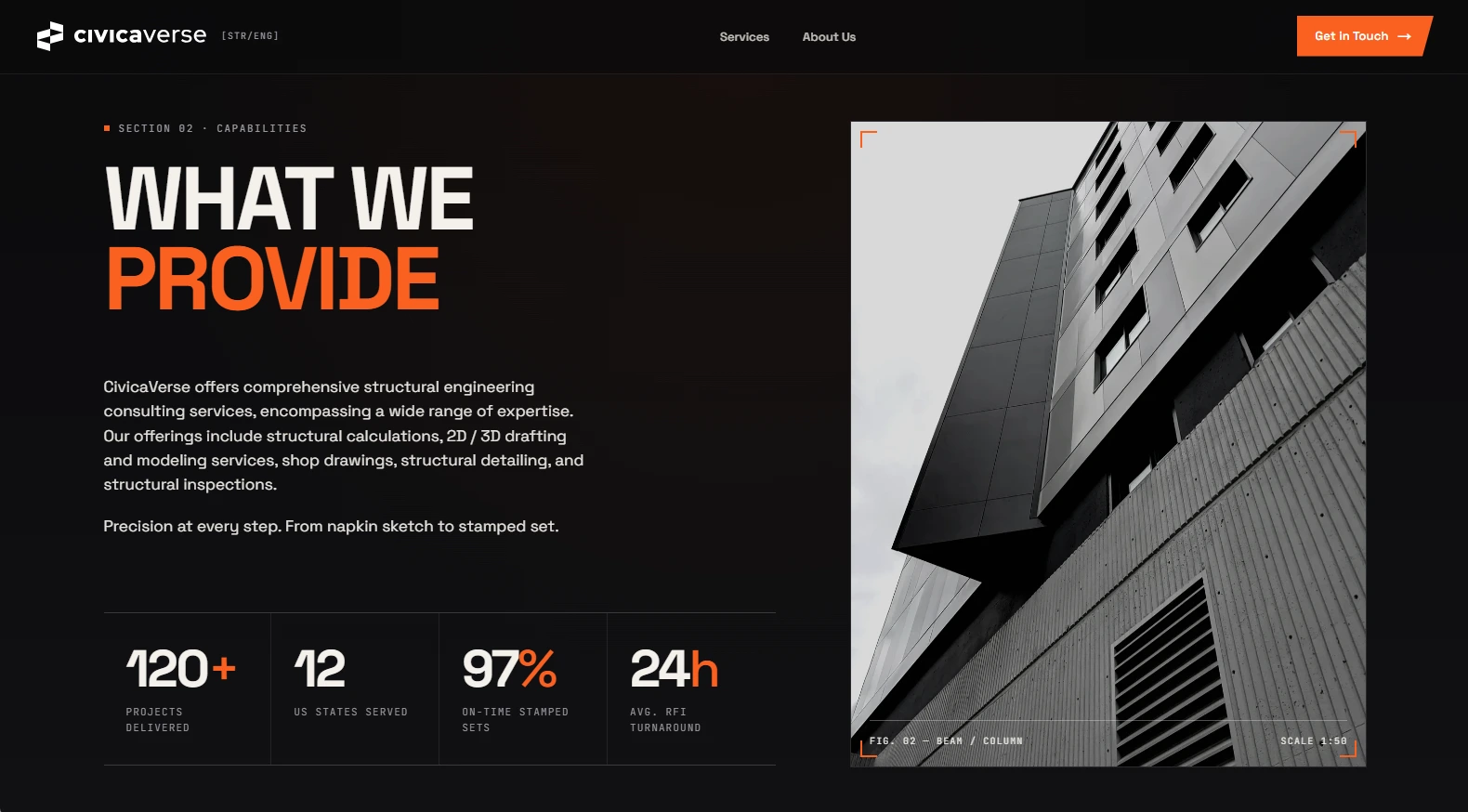
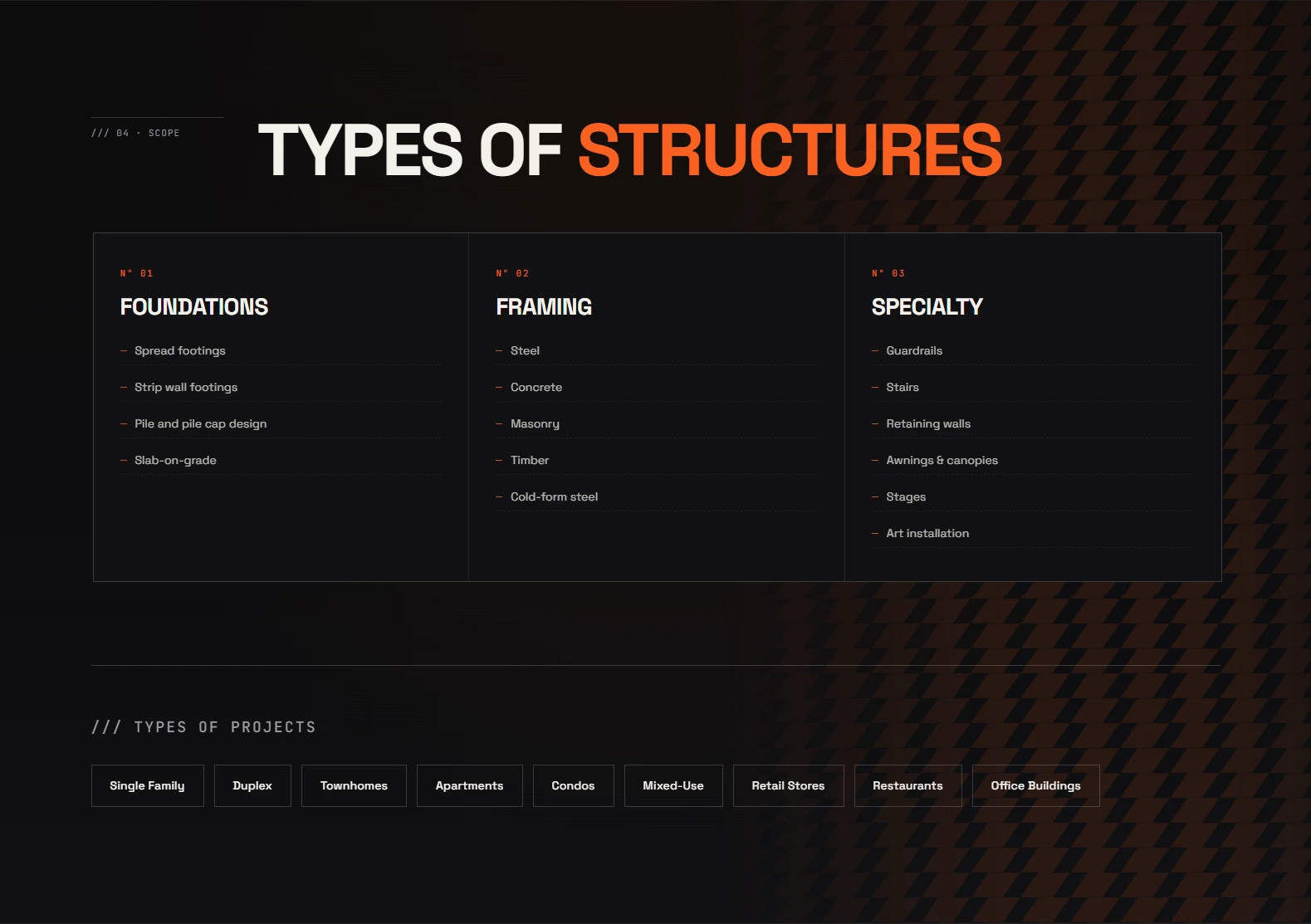
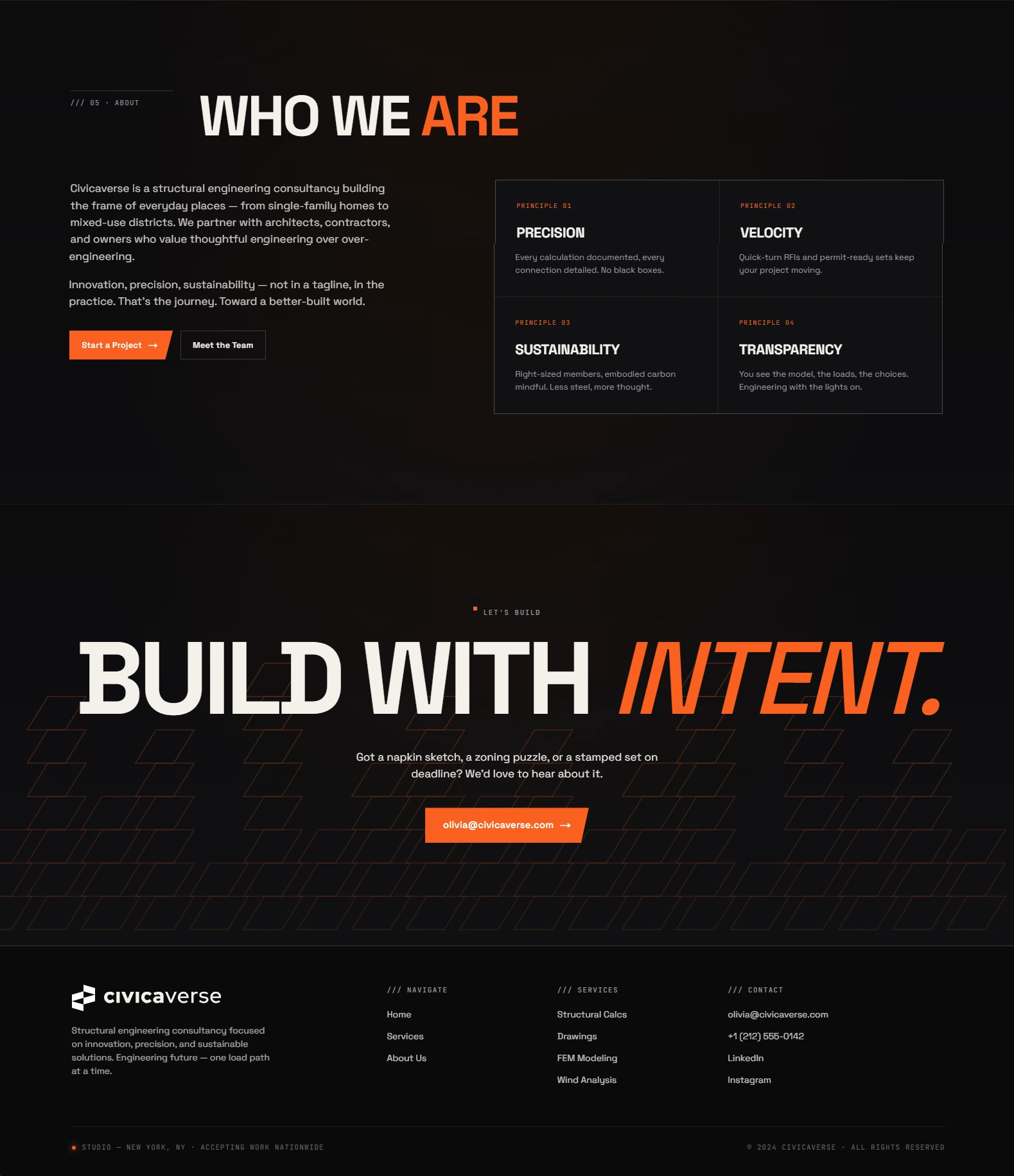
Civicaverse isn't a case study about coding. It's a case study about specification. AI development tools amplify whatever input you give them — a fuzzy design spec produces a fuzzy build; a rigorous design system produces a faithful one. The leverage is in the design discipline.
Owning the design system meant owning the production result, even though I didn't write most of the code. The bar for the shipped site was set in the Figma file — and held in production — through the structure of the spec itself. That's what 'design ownership' means to me now. Less about which tools I touch; more about whether the design intent survives the journey to production.
The biggest takeaway: AI tools don't replace design rigor — they reveal it. Every place my spec was fuzzy, the AI guessed. Every place my spec was clear, the AI built it. That's a clarifying feedback loop, and it raises the bar on what a 'design system' has to actually do to be useful.
The next version will introduce a small content management layer so the firm can update services and project lists without touching code. Same design principles, just less friction between content and craft.